When the House Gets Quiet—and You Finally Get to Choose
For a long time, my living room wasn’t wrong.
That’s what made it so hard to name.
Nothing was broken. Nothing was ugly. Nothing demanded fixing.
And yet, every time I walked in the door, something in me went flat.
Blah is the only word that fits.
The room didn’t hold me. It didn’t spark me. It didn’t invite me to sit down and exhale. It was just… there. And so was I.
There were seasons when that didn’t really matter. When the house was full of motion and responsibility and noise, I didn’t have the luxury of noticing walls. I was busy keeping people fed, schedules moving, days upright. You don’t stop to feel a room when you’re in survival mode.
But when that season ended, I didn’t settle back into the space.
I avoided it.
I went to my friends’ houses. I stayed busy. I found reasons not to be home.

Even creatively, I couldn’t breathe there. I carried my easel and paints out to the porch and spent an entire summer painting outside instead—listening to birds, feeling the breeze, letting rain hit the roof while I worked. The porch felt alive. The living room felt muted.
When I eventually got my studio, it became obvious: I would rather be anywhere than inside that room.
Neutral as a Shield
Years earlier, after my husband passed, I painted over the walls we had created together.
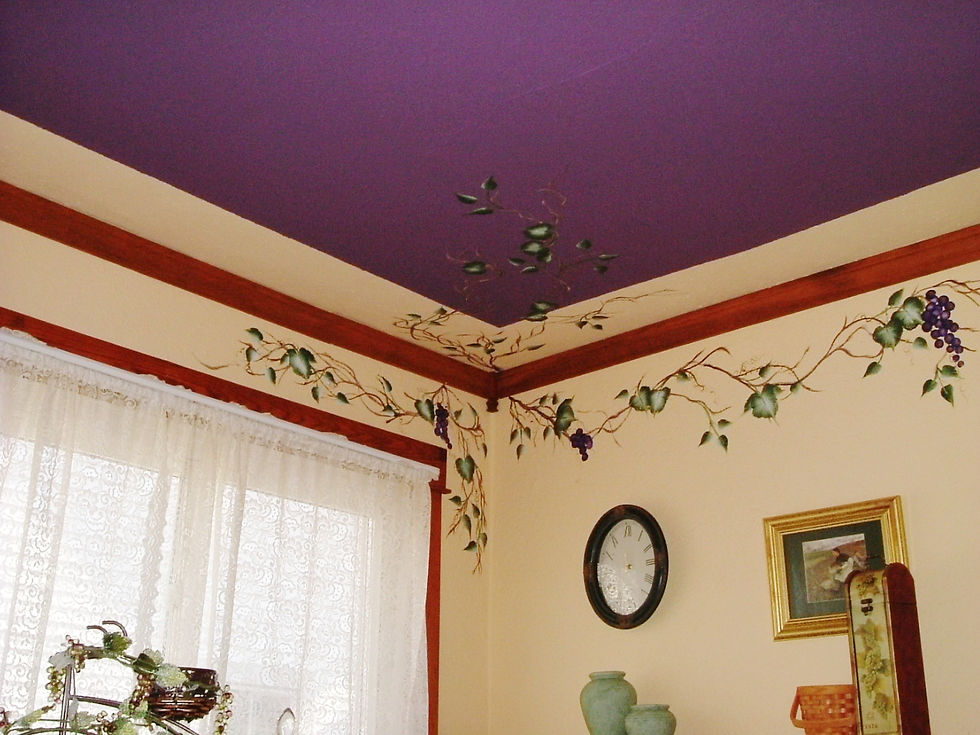
We loved color—deep plum, butter-yellow, decorative painting we worked on side by side.
Those walls held memory. Too much of it. Every room felt like a conversation I wasn’t ready to keep having.
So I covered it all.
Not thoughtfully. Not creatively. I didn’t have the energy. I chose neutral because neutral asked nothing of me. Sage green walls. Tan ceilings. Quiet. Safe.
That wasn’t a design choice.
That was grief management.
And it worked—until it didn’t.
The Moment Color Spoke Back

I had been circling the idea of change for at least a year, but I couldn’t name what I wanted. I didn’t realize it then, but this season was about finally getting to choose — not for anyone else, but for myself.
Then one day, I opened a brand-new issue of The Turquoise Iris Journal and stopped cold.
Turquoise walls.
Lime green curtains.
I didn’t analyze it. I didn’t debate it.
Something inside me said, There you are.
Not inspiration. Recognition.
I wanted color again. All of it. I had been starved for it longer than I realized.
I hunted for paint samples—too many of them, because color is never honest under fluorescent lights. I started painting new artwork specifically for my walls while the room itself was still unfinished. It felt reckless and thrilling at the same time.
And this time, I didn’t ask anyone else’s opinion.
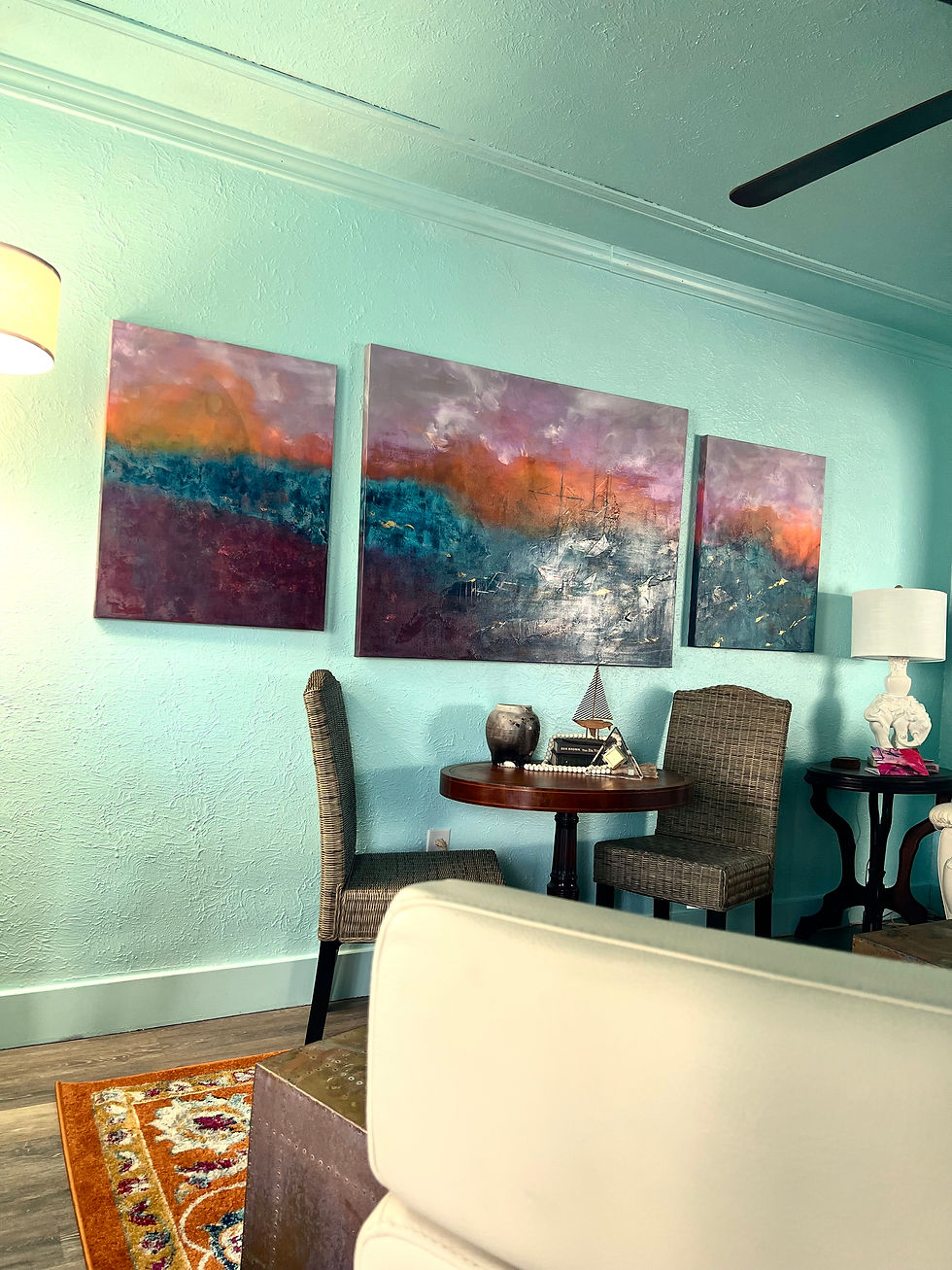
As I write this, the Winter issue of The Turquoise Iris Journal is shipping—and the piece featured there, Places That We Drift, lives right here on my living room wall, inside the space that finally feels like mine.
Letting the Room Breathe With Me
I had a plan at first. Orange sofa. Deep teal chairs. Bold, bold, bold.
Then I noticed those same sofas falling apart after a year. I paused. I listened. And I chose differently—a cream-colored leather sofa and chair that gave my eyes somewhere to rest once the turquoise walls, lime curtains, and vibrant art took their place.

The color didn’t disappear. It showed up in layers—rugs blooming with orange and magenta, paintings alive with blues and teals, warmth moving through the room in its own time.
Nothing arrived all at once.
I found antique brass cube tables with soft patina that grounded the space.

An old secretary with deep walnut tones that brought weight and warmth. Each piece came when it was ready.
There were many moments I caught myself smiling and thinking,
“I’m so glad I live alone. No one is asking me when this will be done.”
That freedom changed everything.
The Shift I Didn’t Expect
I didn’t understand how deeply the space had been affecting me until I painted the first room.
Nothing was hung. Nothing was styled. And still—the color alone lifted something in me. I felt lighter just standing there.
Now, I don’t rush to my studio to escape my house. I still love my studio—but I don’t feel drained at the thought of coming home.

Recently, a stranger came to my door on a cold, rainy day. Without hesitation, I invited him in to sit and talk. As he settled into the room, I realized something quietly, almost with surprise:
I didn’t feel the urge to apologize for my space.
I felt proud of it.
I felt at ease inside it.
If You’re Standing Where I Was
This isn’t a decorating story.
It’s a permission story.
If you’re living alone now—if the house is quieter and you’re finally allowed to ask what you want—you don’t have to do everything. You don’t need a plan. You don’t need a timeline.
Start with what makes you feel good.

For me, it was a small, handmade elephant I found in a vintage shop. It’s made entirely of scrap fabric—stitched together in oranges and teals—with little tassels hanging from it. It’s playful and imperfect and unapologetically happy. I bought it simply because it made me giggle.
That was enough to begin.
One object.
One color.
One corner of your life.
And once you let yourself start, something else happens.
You begin to notice the spaces that are still waiting—not in a pressured way, but in a curious one. The room that no longer needs to be what it once was. The area that’s ready to tell a different story now.
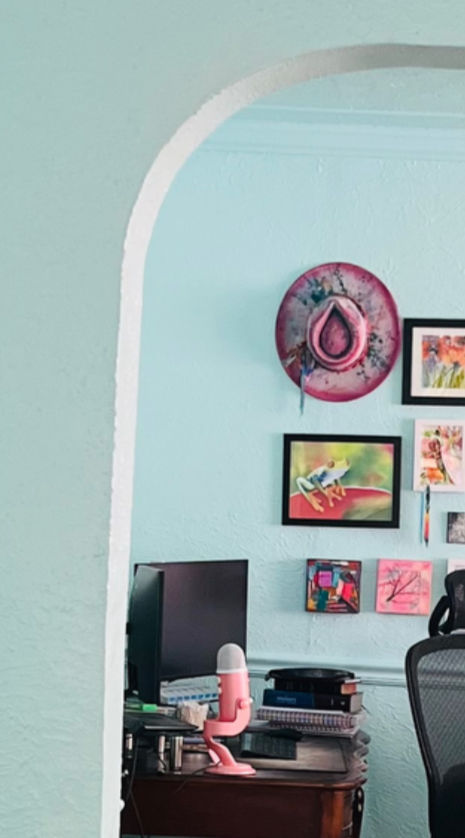
My old dining room no longer holds a table. It holds work. Thought. Creation. It’s becoming something else entirely—and the walls there are speaking too.
That’s a story for another day.
But if this one thing is true, it’s this:
When you finally give yourself permission to choose, your home starts answering back. When you finally get to choose, even the smallest decisions can begin to change how a space feels.
And if you’re feeling those small nudges—those quiet thoughts that say maybe it’s time—don’t ignore them. You don’t have to act all at once. Just listen. Start small. Let one choice lead to the next.
Sometimes the most meaningful changes begin not with a plan, but with permission.


Comments